Foster Youth Are the MOST Disconnected Young People
Youth in foster care are among the most digitally disconnected populations in the country. On average, 80% of foster youth do not have access to the Internet and a computer where they live. This compares to only 10% of “average” teenagers, and 21% of low-income teens. Without this access, our kids fall behind and drop out of school, do not go to college, and face unemployment and poverty.
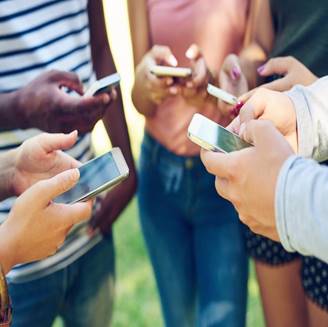
- A $22 million California Public Utilities Commission (CPUC) pilot program with iFoster that provides mobile phones to 33,000 California current and former foster youth.
- Free new smartphone with free unlimited voice, text, and data.
- Leverages Federal Lifeline program funded by Universal Service Fund.
- Replicated for pandemic response in multiple states.
- Replication of LifeLine pilot program with other State Utility Commissions.
- iFoster partners with Microsoft and computer manufacturers to distribute low-cost computers and tablets to help foster youth succeed in school, apply for jobs, and build their support networks.
- Government and philanthropy have made it possible to provide free laptops to students, job programs graduates and iFoster TAY AmeriCorps Members.
- In 2020, iFoster provided over 10,000 laptops nationwide for distance learning.


In 2016, iFoster had USC study 730 Los Angeles, Placer, and Madera foster youth who received our laptops. Results showed:
-
-
- Improved grades.
- Reduced missed school days.
- Increased pursuit of college and employment.
-
-
-
- Improved relationship with bio family.
- More likely to connect with support network.
-
-
- Increased life satisfaction and self-esteem.
- Reduced depression and suicidality.
iFoster has worked with Children’s Bureau to develop a Tech Access Toolkit for tribes, states and community-based organizations to be able to replicate iFoster’s programming to bridge the digital divide. This includes planning, program model, operating procedures, and templates:
- Program design.
- Access to technology and unlimited data.
- Outreach to eligible recipients.
- Efficient distribution.
- Funding from philanthropy and/or government.
- Activities to leverage existing government programs such as LifeLine.
If you are interested in the replication toolkit, please email support@ifoster.org